Showing posts with label Intramuros. Show all posts

Wednesday, February 11, 2015

Bahay Tsinoy - Saga of the Chinese Culture in the Philippines


One of the most surprisingly engaging museum visits I've had was with Balay Tsinoy, a museum that pays homage to the migration and evolution of all things Chinese in the Philippines, including their eventual assimilation into the society.

Kaisa-Angelo King Heritage Center courtesy of wikipedia.
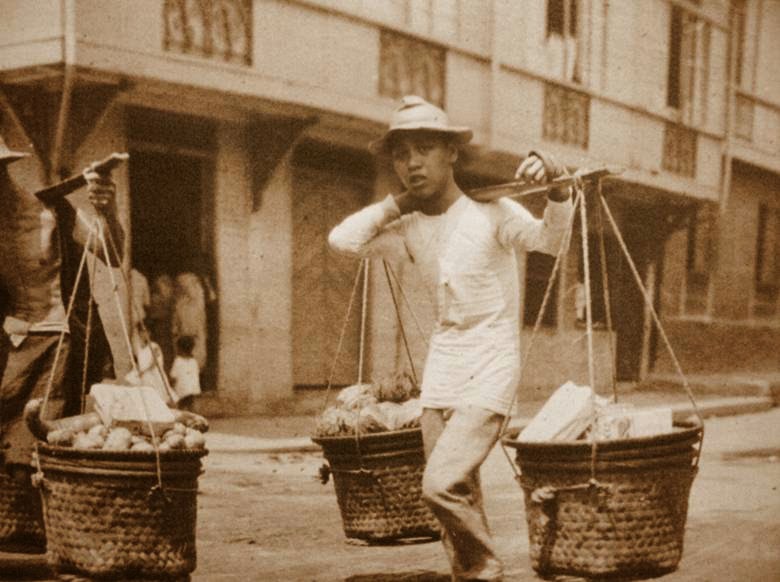
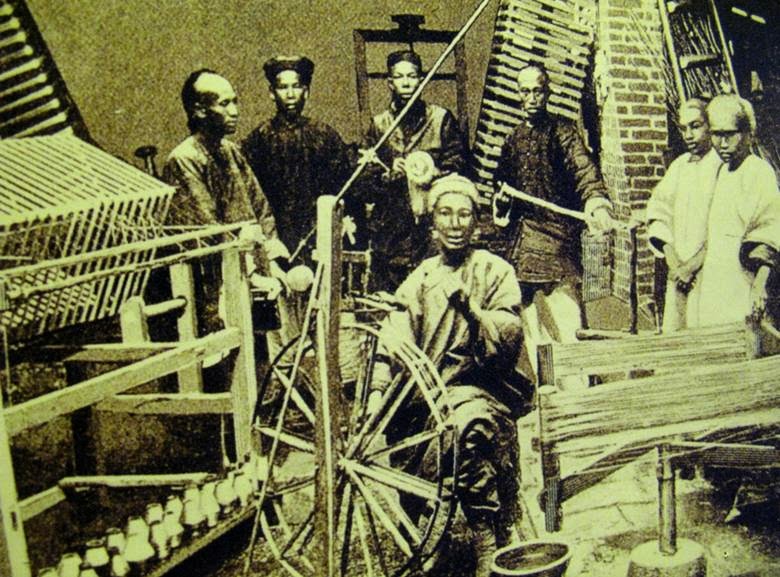
It can't be emphasized enough that the Chinese influence is tangible enough to merit a look back into a colorful history of their origin and migration. Though I mostly find photographic displays in museums boring, I was absolutely enamored with the old photographs of Manila and could hear Barbra Streisand humming "The Way We Were" ever so gently inside my head.

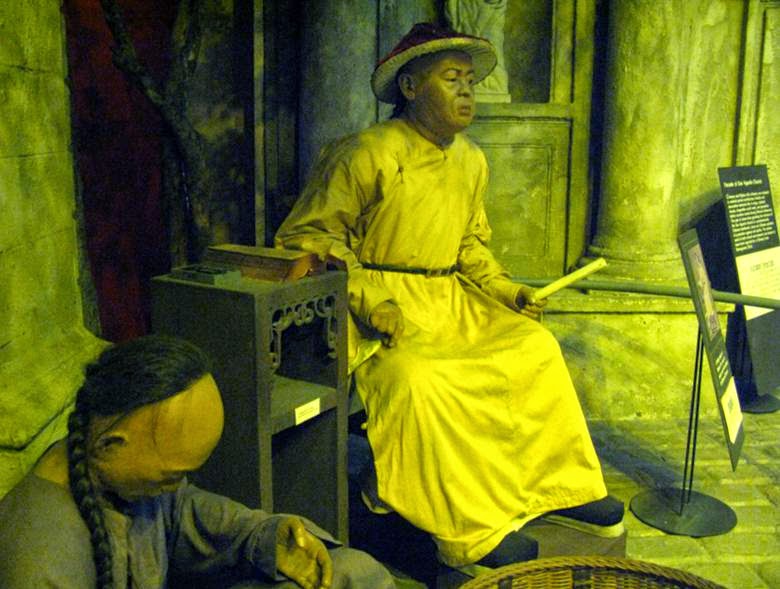
The museum is tastefully presented in beautiful dioramas and depictions, reminding us that our everyday contemporary lives are subtlely influenced by the Chinese culture. Moreover, this heritage center helps promote cultural identity. After all, the "tsinoys" (Chinese Filipinos) aren't foreigners. They are our brothers and fellow Filipinos who share similar dreams of decent progressive lives.

I didn't realize that the term "Sangley" refers to "Filipinos with some Chinese ancestry". The term was used by the Spaniards for the Chinese, coming from the word "seng-li" which means "business" in the Amoy dialect. Even back then, Chinese immigrants were business-oriented and hard workers. Fact is, 90% of the Chinese during the first 2 centuries of the colonial regime came from the Fujian province; the rest from Canton. They came to the archipelago as merchants, laborers and artisans. They helped build the colonial city. This explains why there are fu dragons seen at the vicinity of San Agustin Church as well as some bridges leading towards Binondo. These fu dragons are even found at the gates of Cebu Cathedral. These days, tsinoys whose ancestry hail from Fujian are called "Lan-nang" (a Hokkien term) while those from the Guandong province are called "Ken-tang-lang". Sangleys comprise 18-27% of the Philippine population. About 1.5 million Filipinos have pure Chinese ancestry.

Housed in the Kaisa-Angelo King Heritage Center in the walled city of Intramuros (somewhere at the back of the Manila Cathedral), the museum is spread on two floors and divided into different sections: The Early Contacts, Parian, Colonial Culture, Emergence of the Chinese Community, In Defense of Freedom, Life in the 1800s, National Leaders of Chinese Descent, Gallery of Rare Prints and Photographs, Martyr's Hall, Ceramics Collection, Rare Philippine Shells Collection, and the most recent "Tsinoys in Nation Building" (2004). I am thus inviting everyone to come and visit this museum.

This tells stories not just about the Chinese in the Philippines. This tells the story of our nation as well.

This is the Eye in the Sky!


The Spaniards persecuted the Chinese leading to massacres. The Sangleys were separated into quarters called Parian where they worked and lived. Parian was equivalent to today's Chinatown. Similarly, a Parian District is found in Colon, Cebu City.   


Entrance to San Agustin Church


The Public Reader reads and writes letters for a fee, servicing illiterate Chinese folks.


Ilustrado or "the enlightened class" emerged at the end of the 19th century. Influenced by liberal ideas then prevalent in Europe, the intellectuals from Chinese mestizo families and wealthy indios began to think of national concerns giving birth to the "Filipino identity" an aroused sense of nationhood paving the way to a unified cry for reforms.

Chinese gastronomy: pansit, lumpia, siopao, etc.


In 1890, Rosario Street was one of the finest shopping centers in Binondo.


Ceramics dating from the 10th to the 17th century 


For more information, visit their website here: http://bahaytsinoy.org/

The museum is open daily except Tuesdays, from 1PM to 5PM only. Entrance fee is PhP100 for adults and PhP60 for students and children. Photography is allowed inside. The heritage center is located at #32 Anda corner Cabildo Streets, Intramuros, Manila. Address your specific queries here - (632) 5276083 and (632) 5266796. Email them at info@bahaytsinoy.org

A painting on display by the stairs leading to the second level.


Sunday, February 1, 2015

Fort Santiago - Manila's Principal Tourist Destination (Manila, Philippines)


Fort Santiago was a formidable fortress standing on a portion of the 64-hectare walled city of Intamuros, guarding the entrance of the Pasig River. When Miguel Lopez de Legaspi, the first governor-general of the Philippines under the Spanish rule, envisioned and founded Intramuros in 1571, this arose from what was once the Muslim settlement of Raja Sulayman. The original fortification was a palisaded structure of logs and earth.

Notorious Chinese pirate Limahong (Lin Feng) invaded and succeeded to destroy the wooden fortress in 1574 but wasn't able to drive away the Spanish forces. Limahong was driven away from China by Emperor Ming so his forces sought refuge in Ilocos Sur where plans of attacking Spanish-held Manila came to a fruition. That time, China had a "no-war" policy with its neighbors, a far-cry from the very arrogant and disruptive stance of the present mainland Chinese leaders who, though they haven't wage physical war, have began claiming lands and shores that are not theirs, bullying the territory's sovereign owners.

Fort Santiago was eventually rebuilt between 1589 and 1592, this time made of stone. Earthquake tore down the fortress. For 2 years, between 1762 and 1764, British occupation army took residence here. But what isn't clear to me was where the whereabouts of the Spaniards at that time. Fort Santiago was occupied by the Japanese military in 1942 where hundreds of civilians and guerrillas were imprisoned, tortured and executed. Thousands of women were made into "comfort women", sex slaves and/or killed. The fort was destroyed in the Battle of Manila in 1945.

It was declared a shrine of freedom in 1950. Restoration work started in 1951.

Its most famous habitue was the Philippines' National Hero, Dr. Jose P. Rizal (left), who was imprisoned here on the days before his execution in Luneta in 1896. Here, he wrote his poem, "Mi Ultimo Adios" (The Last Farewell) which was smuggled out of the fortress inside a lamp. These days, the original copy is "entombed" in a small corner that has become a Rizal Shrine which houses other memorabilia.

Fort Santiago, aside from its historical significance, provides scenic views of Manila's riverside promenade and the Pasig River. It is also Manila's number one tourist attraction. If there's only one place to visit in this mostly-transit city (for most foreign visitors at least), this would be it.

Entrance is PhP65 ($1.50). The fortress is open between 8AM and 6 PM, but the Rizal Shrine inside closes at 5PM. I would advise against getting one of those horse-drawn carriages. They charge PhP300 to PhP350 ($6.80-$8) by the hour and some even up the ante at PhP500 ($11.50) even if you've pretty much shook hands on a much lower price. Intramuros is safe; has guards dressed in Katipunero garbs; and there are particular places to check out other than Fort Santiago which is just a corner of the walled city of Intramuros.

This is the Eye in the Sky!


Plaza Armas


Above the ramparts


Wouldn't you want a spot here to bask in the sun and watch boats pass by?

Pasig River


Those holes-on-the-floor on the ramparts lead down to prison cells.

Dr. Jose Protacio Rizal is a physician specializing in ophthalmology, not an optometrist. He operated on his mother's cataract.

This leads to the prison cells.

Manuel L. Quezon was the President of the Commonwealth of the Philippines serving between 1935 and 1944.