Showing posts with label Indigenous Tribes. Show all posts

Monday, April 7, 2014

Parade of Philippine Indigenous Tribes at the Gap Farming Resort, Davao City


The geek in me truly appreciated this portion at the Gap Farming Resort - the Parade of the Philippines' Indigenous Tribes, otherwise known as the ethnic groups found in every region of the country. These were the folks who lived before; the ones who pioneered the lands and who embraced agriculture as a way of life. The resort's list is by no means complete; they even overlap, but which other local resort even tries to do the same? Indeed, if one of the resort's goals was to educate, it succeeded many times over by giving us this compendium of ethnolinguistic groups whose languages hail from the Malayo-Polynesian (Austronesian) base.

I would have to say that there are several other "ethnicities" that deserve to be included in the list, many of whom are grouped according to the languages and/or dialects they use, language being their (most) distinctive feature, aside from physical attributes, lifestyle and traditional practices.

From the get go, here are just a few additions to the list: Badjao, Bol-anon, Waray, Manileno, Cebuano, Ilocano, Pangasinense, Kapampangan, Bicolano, Surigaonon, Hiligaynon, Gaddang, Moro, Sambal, Sumbanon, Kagayanen, Ilongots (the headhunting tribe of the Carballo Mountains), Tumandok (Central Panay island). Unfortunately, I seem to have missed the list from Regions 8 and 9.

For the record though, these are what's listed at the Gap Farming Resort:

Region 1 – Ilocos Region

Bontoc
Balangao
Isneg
Tinggian
Kalanyuya
Kankaney
Ibaloi
Bago
Aplai

Region2 – Cagayan Valley

Bugkalot
Dumagat
Agta
Kalinga
Kaddang
Ikalahan
Ibanag
Isinai
Ivatan
Itawis
Igataynon
Ilaniom
Ifugao

Cordillera Administrative Region

Kalinga
Isneg
Tinggian
Apayao
Kankaney
Ibaloi
Bontoc
Isadanga
Iwak

Region 3 – Central Luzon

Aeta
Ibaloi
Kankaney
Negritos

Region 4 – Southern Tagalog
Aeta
Iraya
Alangan
Bilid
Batangan
Hadyawan
Kanunuo
Ratagnon
Tagbanua
Palawanon
Batak
Cuyunon
Taot Bato
Mangyan

* Region 4 is further divided into 4A (Calabarzon - Batangas, Cavite, Laguna, Lucena, Quezon, Rizal) and 4B (Mimaropa - Marinduque, the Mindoros, Palawan and Romblon)

Region 5 – Bicol Region

Agta
Isarog
Abiyan


Region 6 – Western Visayas

Ati
Ata
Bukidnon
Sillod
Mangabat
Karolanes

Region 7 – Central Visayas

Ati
Magabat

Mangyans of Mindoro

Buhid
Hiraya
Manunuo
Alangan
Baon
Tao
Buid

Palawan Groups

Tagbanua
Palawan
Molbog (of Balabak island)
Batac
   
* Region 8 is Eastern Visayas which has Tacloban as the Regional Center (Biliran, Samar, Leyte, Ormoc)
   Region 9 is the Zamboanga Peninsula with Pagadian as its Regional Center (Pagadian, Isabela, the Zamboangas, Sibugay)

Region 10 – Northern Mindanao

Higaonon
Bukidnon
Manobo
Mamanwa
Talaandig
Subanon
Dibabawon
Banwon
Camiguinon

Region 11 – Southern Mindanao

Bagobo
Mandaya
Mansaka
Manobo
Bilaan
Tiboli
Tagakaolo
Ubo
Dibabawon
Ata
Mangguangan
Tasaday
Matigsalug

Autonomous Region of Muslim Mindanao (ARMM)

Tiruray
B’laan

Region 13 – CARAGA

Higaonon
Manobo
Mamanwa
Banwaon
Dibabawon

Region 12 – Central Mindanao

    Tiruray
      Manobo
      B'laan
      Bagobo

    National Capital Region (NCR)

Some of these terms have been used pejoratively, almost defamatory by some sectors in referring to a group of people. Despite the differences, they make our culture rich and varied. In this regard, I am enjoining the parents to take your children here so they can realize the richness of our ethnographic landscape.

Gap Farming Resort is located in Ma-a, Davao City. It is a theme park paying homage to "agriculture", tourism and education.

This is the Eye in the Sky!


An Overview of Gap Farming Resorthttp://eye-in-the-blue-sky.blogspot.com/2014/04/bridging-fun-education-history-at-gap.html


A Japanese Cave is found here, but there's another hotel/resort/restaurant nearby that has their own Japanese tunnel: http://eye-in-the-blue-sky.blogspot.com/2013/05/swim-dine-and-relax-at-d-japanese.html


Wednesday, April 2, 2014

Bridging Fun, Education & History at the Gap Farming Resort, Davao City


Once upon a time, human kind "hunted" to survive, the way animals foraged its environment to find food. But with the advent of agriculture, of farming, the practice allowed men to live easier, more "humane" lives. At the Gap Farming Resort (aka Gap Farming and Orchard Resort), located in the Green Meadows of Ma-a, Davao City, the cultivation of land becomes its thematic reason for being. After all, what is Mindanao without agriculture. Moreover, the resort ups the ante by adding history and ethnography into the fold.

In this resort, you could hike up some trails in its hilly terrain, play basketball, go on a picnic, check out its parade of national heroes and Philippine Presidents, as well as view effigies of Philippine's folkloric monsters as well well the country's livestocks and wild animals. The resort also has a restaurant which explains why there's a minimum corkage charge if you bring food and beverage from the outside, but this isn't much.

You may also opt to take a dip in their swimming pool or hitch a horse or a carabao ride (for a fee, of course) at their paddock. If you require a sliver of spirituality, they have a chapel with a statue of the crying virgin. I have to mention though that, due to its uneven terrain, a guest would have to endure lots of well-paved stairs to get to the resort's different areas. Nope, no provisions for wheelchairs.

From the gate, a gigantic statue of a farmer riding his carabao greets you. A souvenir shop-cum-restaurant is nearby, as well as the swimming pool area. Most of the time, there's very few guests so you're left to your own devices. In fact, you could hardly find resort staff except at the restaurant area. What sets it apart from other nature resorts of Davao (like Ayala's Eden or Loleng Resort) is its relative accessibility. It's closer to the city center and you don't even require a reservation. The better news is, entrance is affordable: PhP40 per person. Other rates: PhP70 for its swimming pool (cheaper than D Japanese Tunnel's pool), PhP10 for the Japanese Cave, PhP75 each for horse back riding or cangga ride. Corkage is as follows: P200 for a lechon, PhP100 for a case of softdrinks or beer, PhP100 per bottle of hard drinks/wine. For more information, you may call 305-3650. Please do NOT inquire about the resort's other services/rates in this blog. Call the aforementioned number.

The resort also has a Japanese Cave which seems common in this area of the city owing to its hilly terrain. The cave is earthquake-tested dug during the Second World War between 1941 and 1945. Just above the cave is a tall tamarind tree and you won't miss the signage there.


The other features of the resort are its Conference of Philippine Monsters and its Parade of Philippine Indigenous Tribes which I think is a brilliant inclusion. There's a bit of research involved in the latter "parade" and I find it interesting to find these ethnicities being represented in their regional garb although I am sure the artist took some liberties, as I am sure these garbs would tend to overlap. I am featuring the "monsters" and the "ethnic tribes" separately so check them out if you are into them. At the Parade of Philippine Presidents, most are represented except Noynoy Aquino (as of this writing). Meanwhile, at the Parade of National Heroes, several unfamiliar names have been included, and this of course thrilled me no end. Purmassury? Panday Pira?

If you want to give your child an unforced lesson in Philippine History, visiting Gap Farming Resort won't be such a bad idea. After all, I have not encountered a themed park such as this one in the Philippines.

This is the Eye in the Sky!

Overview of Gap Farming Resort
Souvenir Shop and Restaurant. Nearby is the Swimming Pool (below).


They call this: "Rendezvous Under the Bamboo Tree Beside the Brook".

Tree House beside the basketball court.
Brookside picnic area.


Lots of stairs.

A picture-perfect spot.

Horse by the paddock.


Paddock (a small enclosed field near a stable or barn for pasturing or exercising animals; an enclosure where horses are saddled and mounted)


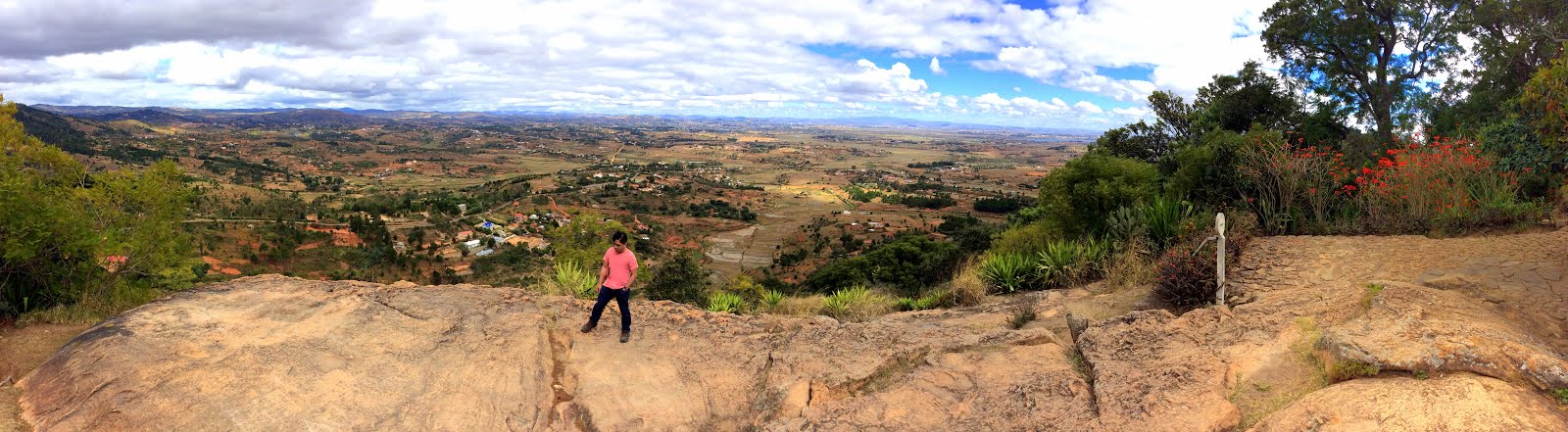
A view from the dance hall.


Gabriela Silang leads the Philippine Heroes

Parade of Philippine Heroes.

Panday Pira, the first to make local cannons (quills).

Sulu Princess Purmassury bravely led the foreign aggressors away with her wit and bravery.

Pangasinense amazon Princess Urduja (1350-1400). I thought she was fictional. As it turns out, Urduja was a real princess who impressed Moroccan adventurer Ibn Battuta with her military exploits and her ambition to lead an expedition to India, known to her as the "Pepper Country." She also showed him hospitality by preparing a banquet for his ship's crew. Urduja generously provided Ibn Battuta with gifts that included robes, rice, two carabaos and four large jars of ginger, pepper, lemons, and mangoes, all salted, in preparation for Ibn Battuta's sea-voyage to China

Diego Silang, Ninoy Aquino, Francisco Dagohoy


Ferdinand Marcos, Cory Aquino, Fidel Ramos, Joseph Ejercito Estrada, Gloria Macapagal-Arroyo. Some of the more recent Philippine Presidents except the last one (bottom right). Who is he? If you get it right, I'll give you a sugar plum. :)


Japanese Cave (1941 to 1945). There's a PhP10 entrance.

Philippine Monsters (above and below). Check out our separate post on this "parade".


More monsters herehttp://eye-in-the-blue-sky.blogspot.com/2014/04/parade-of-monsters-at-gap-farming.html


Chapel


Parade of Philippine Animals Tame and Wild

Parade of Philippine Indigenous Tribes. Check out our separate post on this "parade".
The other Japanese Tunnel/Cave is nearby, just a kilometer or so away from gap: http://eye-in-the-blue-sky.blogspot.com/2013/05/swim-dine-and-relax-at-d-japanese.html
This is the iconic view of  Gap Farming Resort although this view is already hard to get from the outside.