Thursday, May 17, 2012

Pon's River Guest House - Accommodation in Don Khong


Don Khong, Siphandon, South Laos - It took me awhile to decide on my accommodation in Don Khong. It was one of the few non-reserved nor pre-booked rooms during this whole travel. Agoda doesn't seem to book hotels in Siphandon's biggest island so i had to depend on wikitravel and LP for information. After perusing through a dozen accommodations, I came upon Pon's River Guest House, just north of the bridge - three buildings to be exact.

The main come-on for me was its owner, Mr. Pon who's a veritable wealth of information and can arrange for transport anywhere in South Laos. That sounded good to me. After all, this was going to be my last stop in Siphandon before heading back north to Pakse (the capital of Champasak Province). But I never saw the "legendary" Mr. Pon.

I basically sauntered off and walked into the guesthouse at close to noontime. No one was around, like Champasak except for a guy who welcomed me with a "hello". He must be Mr. Pon's son because I would see him drive his SUV every so often. There were three choices on the price range: a 50,000 kip non-AC room ($6.25 fan room) which is hard to beat; 80,000 kip ($10 AC double room, i.e. with 2 single beds); 160,000 kip ($20 AC room with cable TV). It's really a no-brainer. I booked and paid for the $10 which was more than what I expected.

Pon's River's Guest Logbook: The list goes French, Spanish, Filipino, French.

The guest house has 2-stories and 18 rooms situated adjacent to the hotel lobby (to its left). From a staircase, Room 9 greets me with its comfortable, homely ambiance. Fronting the place is a veranda with wooden, rattan and rocking chairs. There are worn out books on a shelf as well. Most times, this veranda is unoccupied, the guests keep to themselves inside their rooms; myself included.

The room has a hanging mosquito nets that go unused. The sheets smell fresh; the floors squeaky clean. The bathroom is sizable, dry, and has fixtures that work, with no molds seen. On a printed "hotel principles", article 3 states, and I quote, "Do not use the hotel to be like bars. Do not have a man and a woman sleep together in the same room that break the Lao culture." Article 9 states: "Report impolite clerks to the manager." There are similar "rules" found in other hotels all over Lao PDR.

Just across the small riverside road is Pon's River's Restaurant. Several other restaurants line this lane, most of them have relatively higher prices compared to other places in Laos. In fact, food is in its most expensive here. Bicycles could be hired anywhere. There's an internet shop just 2 buildings south (to the right) of Pon's River Guest House. A newer branch of this lodging is "Pon's Arena Hotel" just a minute's walk north from here.

At night, there's nothing much to do after dinner so it's usually an early bed. I'd usually go through my next day's itinerary first before dozing off to lala land.

I booked my "bus" back to Pakse from Pon's River.

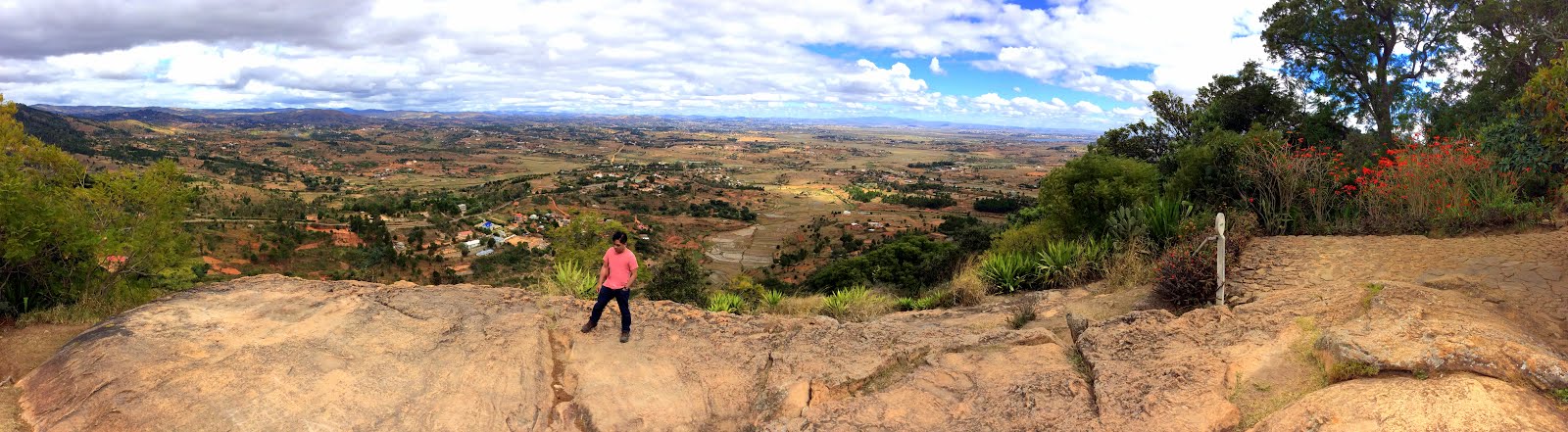
This is the Eye in the Sky!


A tree beside the bridge, then the row of guesthouses.

Pon's River Guest House


No frills lobby

Stairs, second floor. Room no. 9 was to its right.

The veranda at the second floor.

Room 9 and my two single beds. there's a mosquito net hanging from the ceiling (which I never used).


Entrance to the second floor. The lobby is to its right.

House rules

Pon's river Guest House at night.

Sunrise at the Pon's River Restaurant

Bikes for rent

Internet shop

Ratana Riverside Restaurant

The Mekong

A Lao boy


Tuesday, May 15, 2012

Going to Nowhere - The Road to Muang Saen & West Don Khong


Don Khong, Siphandon, South Laos - It was always part of the plan - to see Muang Saen. Officially, the island of Don Khong has 19 villages spread out across its 18 by 8 kilometer landmass. Unofficially, the most important are two towns that the locals call Muang Khong (located east of the island, and has the "ferry") and Muang Saen (located west). Most of the islands 15,000 population gather between these two towns: the tourist lodges and restaurants in Muang Khong; the bustle of local residence in Muang Saen. In fact, while Muang Khong mostly drowses even at sun up, Muang Saen is a little more enervated by its conglomeration of houses, markets, a bigger gas station, temple in every village, etc.

This post tries to document that ride from my hotel in Muang Khong to the road that heads west to Muang Saen. Kham, my motorcycle driver, suggested that we leave at 3 PM to avoid the harsh rays of the sun, but even as we drove into Laos' netherworlds, he was awkwardly covering himself from the sun, I somehow had to offer my sunglasses (he refused).

At a petrol station somewhere in Ban Hinxiao, we stopped to load up and Kham pointed to a huge, beautiful hive of bees. Further on, the landscape alternated from dried rice paddies to lush mini-forests, with a smattering of typical Lao wooden houses that rise on stilts. I knew where we were because every "ban"  (village) were properly identified by signs. We'd occasionally find Caucasian bikers huffing away in exhaustion and the very rare local transport. Somewhere between Ban Sentai and Ban Houasen, I finally found the island's most populous area - Muang Saen! It's a market town.

And this is the Eye in the Sky!


Each ban is identified by signs like this.

Ooops there is me on a running motorbike. :)


Market in Muang Saen

Market in Muang Saen

A shop for motorbike parts and accessories.


Wild commerce

Construction Supplies

High rise construction

Tractor punctuates the rural scenery.

Kham stops by for a barbecue... and offers a stick for me!

Barbecue anyone?

Delicious, actually!

Who'd have known there were sausages here as well.

Full passenger capacity

Wat Ban Houasen


Rattanasing Hotel is located in Ban Na, the village just north of Ban Houay, the most southern village of the island. Price of rooms range from $18 to $25. But this hotel feels too isolated from Muang Khong. It's one of the biggest I have seen in Don Khong though.

Wat Ban Kangkhong

Another bridge in Ban Kangkhong

Map of Don Khong and its villages. The solid line represents our track from my hotel in Ban Xiengwang going south, west then northwest. The broken line represents the supposed track mentioned in LP. X marks the village  where we stopped to visit the toddy palm sugar makers.

Back in Muang Khong, I went straight to Pon's River Restaurant.

Dinner at Pon's River Restaurant.


Sunday, May 13, 2012

Sugary Detours and Toddy Palms in Don Khong


Don Khong, South Laos - On my way back from that temple on the hill, I wasn't aware there was something else in the agenda. Kham, my motorcycle driver, decided to drop by a house along the road. He asked me if I wanted to see how sugar cubes are made from a toddy palm tree. Since 100,000 kip seemed exorbitant for a visit to a dilapidated temple on a hill west of Don Khong, I would agree on any suggestion that extends this journey; anything to optimize the price I had to pay for this afternoon ride.

SIMILAR DETOURS

To be honest, I have done this before - and even thoroughly. These sidetrips to toddy palm villages are also experienced in Cambodia (an easy detour if you're visiting Bantaey Srey), Bagan in Myanmar (another detour when you're climbing Mount Popa from Bagan), and even in various places in Tamil Nadu (India) where Borassus flabellifer is common. The plant itself goes by several common names: Asian palmyra palm, Toddy palm or Sugar Palm. It looks like a coconut tree but the leaves are spread out life a fan and the fruit is a wee bit different from coconut. The term "toddy" refers to the "sugary sap" obtained from the young inflorescence (clusters).

While the toddy palm is common in South and Southeast Asia, it isn't as common in the Philippines which has probably 99% coconut palm variety.

THE MAN WITH A NAKED TATTOO

We stopped by a shed where a family entertains a group of tourists: three Asian women speaking French and a bald bare-chested French guy with a flushed face and a wide grin. He was inebriated. There was an attempt to explain the process but all was lost in enthusiasm, Lao chatter and French gibberish. The ladies were clearly French nationals. One of them was married to the French man who had to occasionally sit by the stool to gain his balance. Amorous and jovial, unlike many French tourists I meet along the way (you gotta lighten up, guys), he started a conversation in French since he couldn't speak English. He pointed to a tattoo at  his back, proudly declaring "she" was "My wife", he muttered in French. Curiously, the girl on his back looked Caucasian: wider eye socket, high aquiline nose, full pert breasts - and absolutely not the beautiful Lao girl she was with! But I wasn't going to point the obvious to him. Maybe when he's sober, he'll see the light of day? :)

TODDY PALM 

Like the usual, the patriarch showed the "male" fruit (the huge and scary phallic object) that is admixed with the female fruit to make several by-products: there's the sweet and delicious sap/juice; this can be fermented to make wine; or concentrated to make a crude sugar called "jaggery". There are several other culinary uses - from the leaves, the fruit, the bark of the tree, the palm shoot, the sap, the sprout, etc. In fact, Tamil Nadu has supposedly accummulated an enviable bevy of culinary and gastronomical delights from the toddy palm. They call it "nungu" in Tamil Nadu - "lontar" in Indonesia and "tnaot" in Cambodia. British english sometimes refer to it as "ice apple". Huh?

The sugar cubes look like chocolates (they always do) and is one of the sweetest thing this Earth has ever produced. They are placed in palm leaf packets. I asked how much was a piece (which contains 10 pieces each). The French guy stood up (acting as the self-appointed sales person) and said "25,000 kip" which was ridiculous really. I had to laugh. Surely, he must know I had Asian currency, not Euro. Or do I look Japanese again? Each packet costs 3,000 kip - not 25,000 - so I bought 3 pieces for myself!

I didn't feel like lingering longer than necessary so I told Kham that we could go. Sunset waits for me in Muang Khong.

This is the Eye in the Sky!


The Toddy Palm Tree


Lao French ladies

The toddy palm crown and its fruits. This photo only courtesy of wikipedia's Gak.


The male flower/fruit (right) is a huge phallic object where sap is harvested.

Concentrated toddy sap is placed in these circular objects and dried until they curdle and form into sugar cubes.


Sugar cubes or jaggery

Sugar cubes are placed in these palm leaf containers - 10 pieces per packet, and costs 3,000 kip ($0.38) each.


Cordial patriarch

One happy French man - too happy and inebriated in fact!

He proudly shows off his naked woman tattoo supposedly inspired and inked after his Lao wife.

A French girl or a Lao lady? You decide! ;)

This is where this Lao family lives.